9 Years of DevRel at Prisma
I was employee #3 at Prisma and spent almost 9 years working there in Developer Relations.
As the company evolved, I transitioned through various roles. In the early days, I did a bit of everything. I then moved into management to build out the Developer Advocacy team. Toward the end, I went back to individual contributor work as a Staff Developer Advocate.
What I loved most about being a Developer Advocate was to constantly go through a cycle of learning and teaching. As we launched new products/features, I would learn about these and then pour my understanding into educational content.
A brief history of Prisma
I joined Prisma when it was still called Graphcool in January 2017. At the time, the team consisted of the two founders and two other full-time employees.
Here’s summary of the most important company milestones while I was there:
- [May 2017] Launch of Graphcool (GraphQL BaaS): Announcement made it to HN frontpage.
- [May 2018] $4.5M Seed round & rebranded to Prisma: Build the GraphQL data layer for all DBs.
- [April 2020] First release of Prisma ORM (Beta): My launch post made it to the HN frontpage.
- [June 2020] $12M Series A: Democratize the pattern of a uniform data access layer.
- [April 2021] Prisma ORM is production-ready: Announcement made it to HN frontpage.
- [May 2022] $40M Series B: Build the Application Data Platform.
- [October 2024] Launched Prisma Postgres: My launch article made it to the HN frontpage.
- [January 2025] Prisma Postgres becomes production-ready: The Future of Serverless Databases.
What I did at Prisma
Leading launches
One of the core responsibilities I had was to lead launches (anything from minor version releases to major product launches).
As part of those launches, I collaborated with the Product and Engineering teams to explore the new features/products. I typically built example projects, prepared release notes and wrote documentation based on my understanding of the feature and technical input from Engineering.
I also took care of promotional content like blog posts, co-promotion with partner companies, social media announcements, and whatever else needed to be done to gather attention for a launch.
Docs, docs, docs
Throughout my entire tenure, the Prisma docs were always part of my core responsibilities (except for a brief period where they were owned by the Product team).
I planned and executed several major restructurings, wrote content myself, managed the maintenance process, and provided guidance for team members who contributed to the docs.
Building the Dev Advocacy team
At some point I took on a manager role to build the Developer Advocacy team. Over the course of being a manager, I hired more than 8 Developer Advocates. At one point, I also managed the Support team and hired Support Engineers too.
I designed and managed the entire hiring pipeline, from introductory calls, to homework assignments to preparing offers.
Engaging with the community (Reddit, Twitter, HN, …)
One of my favorite activities has been to engage with the community to provide support and get product feedback. Even if the posts were rather hostile against Prisma (as was very common, especially on Reddit).
I found that everyone who posted about having problems with Prisma had valuable things to say. But sometimes, the valuable points were buried in strong language and insults that I had to work through first. My favorite interactions were the ones that started off hostile, and through a polite and constructive response, took a positive turn. Here’s the TL;DR of how I approached the interactions.
My principles for engaging with negative sentiment on Reddit
- Don’t take things personally: The anonymity on Reddit brings out the worst in people. Accept that the tone is rough and focus on the valid points of criticism.
- Be kind: A constructive and polite response often makes the aggressive poster realize that their tone is unproductive.
- Acknowledge problems: Most issues people complained about were valid. That should be acknowledged and the frustrations of the poster validated.
- Refer to GitHub issues: For most problems, I could point to an existing GitHub issue that provided more context or workarounds for an issue.
- Ask to create GitHub issues: If no issues existed, I asked people to create one. This also provides a sense of agency to them.
- Provide workarounds: Provide workarounds that provide immediate relief for the issues at hand.
- Express gratitude: Here’s a person taking time to provide feedback and share their frustrations—thank them for that.
- Offer more support: Share additional resources or offer individual support if an issue remains unresolved.
These principles helped get value out of conversations and gave a lot of online conversations that initially were negative a positive spin! Here’s an example of a user posting negatively about Prisma: Warning: Think twice before using Prisma in large projects. By applying the principles above, my response got the most upvotes and a constructive conversation unfolded below.
Talks & workshops
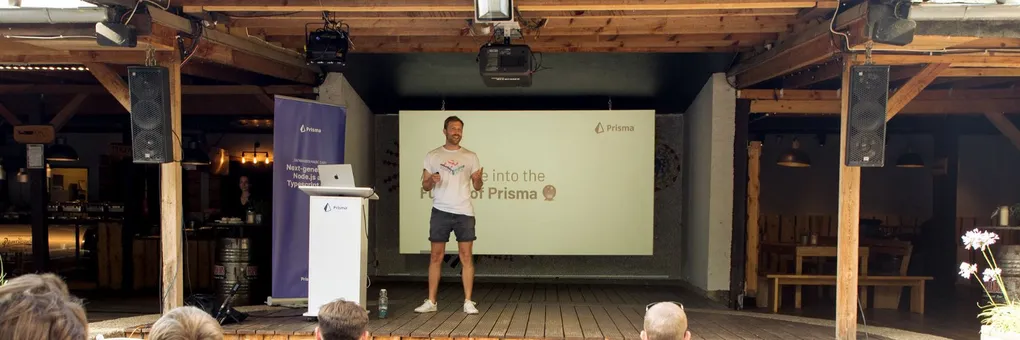
Throughout my time at Prisma, I spoke at dozens of conferences about GraphQL, databases, Prisma, and other topics. Find a selection of my talks here.
I also taught a lot of workshops, in-person and online. Here’s an example from Prisma Day 2021: A Practical Introduction to Prisma.
How to GraphQL
How to GraphQL was the most impactful educational content piece I’ve created at Prisma. I owned the project from start to end and collaborated with several GraphQL community members to execute it. The announcement made it to the HN frontpage.
Conclusion
These are just a few highlights of the things I did throughout my time at Prisma. In a future article, I’ll reflect on some key lessons I’ve learned.
Since leaving Prisma, I’ve been helping other devtool companies with their DevRel strategy, content creation, and other needs. If you’re looking for help in those areas, feel free to reach out.